The women's liberation movement in Scotland by Sarah Browne
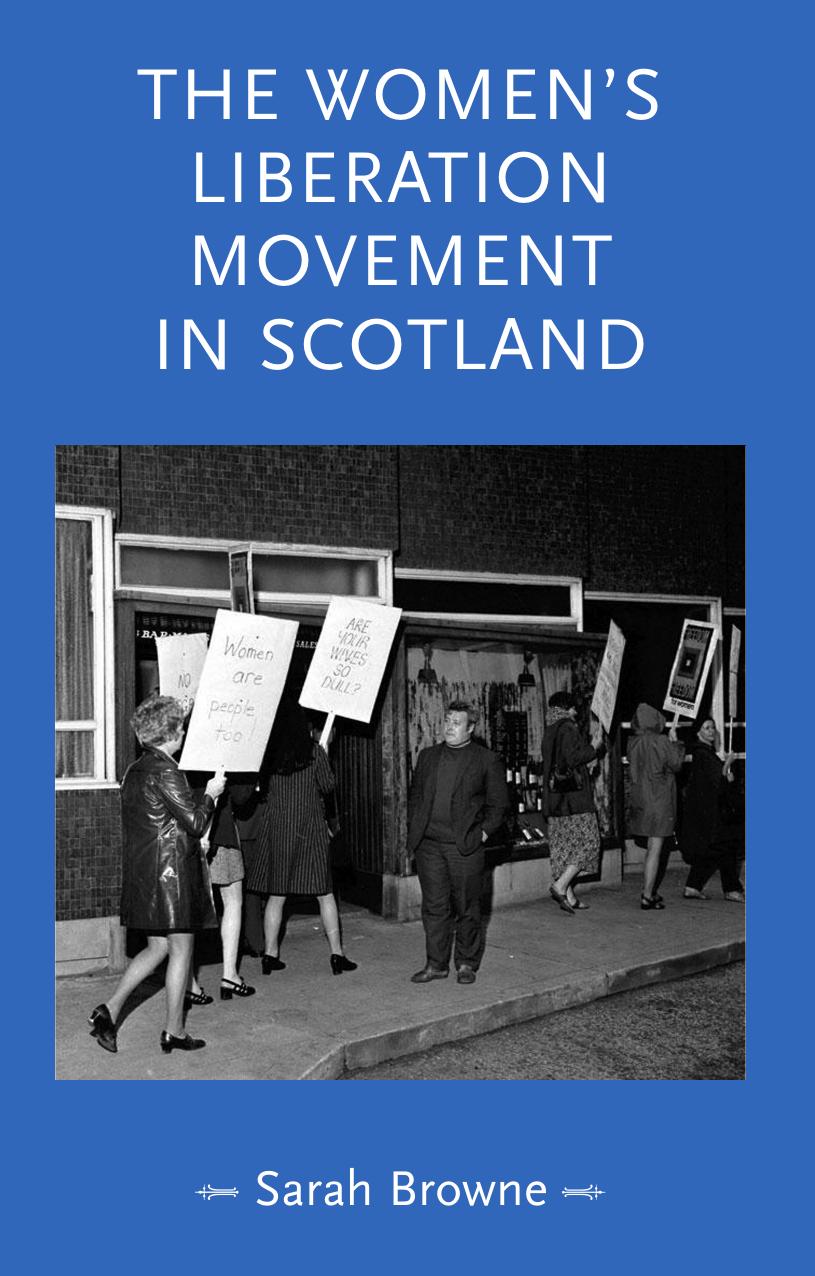
Author:Sarah Browne [Browne, Sarah]
Language: eng
Format: epub, pdf
Tags: History, Modern, 20th Century, Social Science, Feminism & Feminist Theory
ISBN: 9781526112248
Google: fXC5DwAAQBAJ
Publisher: Manchester University Press
Published: 2016-05-16T03:06:12+00:00
Source: Scottish Womenâs Liberation Journal, no. 4, 1978, p. 16.
Ma Broon featured in discussions about the womenâs movement in Scotland once more during the 1970s. In The Scotsman journalist Julie Davidsonâs article âTime of Political Reckoning for the Modern Ma Broonâ she wondered why women, especially those associated with the WLM, had remained silent over the question of devolution.116 Introducing her article Davidson argued that the character Ma Broon and what she represented continued to haunt
the sculleries and parlours of Scotlandâs social history like an irreversible curse. She patrols our psyche like a bossy traffic warden, comic incarnation of the authoritarian drudge ⦠Despite her apparent power, despite her control of the domestic fiefdom, Ma Broon probably asks Pa Broon how she should vote; if she votes at all. Her power is private, internal, compressed and dictated by pragmatism. The dutiful daughters of Scotland hold the head of the countryâs impoverished manhood at the cost of holding their own outside the home.117
Using Ma Broon as her example, Davidson questioned the prevailing myths about Scotland. She also questioned why feminists had failed to engage with the debates about devolved power in Scotland in the late 1970s and argued that womenâs voices âcould have been powerfulâ in these discussions. She challenged the belief of many womenâs liberation activists north of the border that more political power for Scotland would have
been a triumph for the McNasties; for the kind of meanness and mediocrity which has characterised some areas of Scottish public life; for the flexing of machismo muscles in an amphitheatre of reaction and repression. With no nice times for women.118
A vote was held in 1979 to determine whether the people of Scotland wanted to see more power devolved away from the Westminster parliament to a Scottish Assembly based in Edinburgh, conducted against a political backdrop which had witnessed a resurgent Scottish National Party (SNP). The 1970s was a decade in which people north of the border were assessing the implications of more political power and considering what it was to be Scottish.119 Yet, Breitenbach has stressed that âthere is little evidence of active engagement of feminists in the debate on devolution in 1979â.120 The silence about devolution in the WLM is not surprising considering that many active feminists were not party political and had more in common with those groups which operated in a political culture where politics was conducted on the streets rather than in parliaments. The parliamentary nature of the devolution campaign, therefore, would not have interested many active feminists, although smaller womenâs liberation groups, like the Campaign for Legal and Financial Independence, did discuss it.
However, the two issues should not be confused. Womenâs liberation activists in Scotland could feel that the British movement was dominated by those in the South of England and that they had different issues to face and campaign on, while still displaying ambivalence about the devolution issue. Most activists viewed the WLM as an international movement but one which should be more representative and should
Download
The women's liberation movement in Scotland by Sarah Browne.pdf
This site does not store any files on its server. We only index and link to content provided by other sites. Please contact the content providers to delete copyright contents if any and email us, we'll remove relevant links or contents immediately.
The Vikings: Conquering England, France, and Ireland by Wernick Robert(84377)
Ali Pasha, Lion of Ioannina by Eugenia Russell & Eugenia Russell(40316)
The Conquerors (The Winning of America Series Book 3) by Eckert Allan W(37892)
The Vikings: Discoverers of a New World by Wernick Robert(37006)
Cecilia; Or, Memoirs of an Heiress — Volume 1 by Fanny Burney(32635)
Cecilia; Or, Memoirs of an Heiress — Volume 2 by Fanny Burney(32010)
Cecilia; Or, Memoirs of an Heiress — Volume 3 by Fanny Burney(31996)
Empire of the Sikhs by Patwant Singh(23135)
The Secret History by Donna Tartt(19291)
Hans Sturm: A Soldier's Odyssey on the Eastern Front by Gordon Williamson(18649)
Cat's cradle by Kurt Vonnegut(15441)
Pimp by Iceberg Slim(14664)
Sapiens: A Brief History of Humankind by Yuval Noah Harari(14458)
Norse Mythology by Gaiman Neil(13457)
Talking to Strangers by Malcolm Gladwell(13438)
Leonardo da Vinci by Walter Isaacson(13411)
4 3 2 1: A Novel by Paul Auster(12507)
Underground: A Human History of the Worlds Beneath Our Feet by Will Hunt(12144)
The Radium Girls by Kate Moore(12089)
